
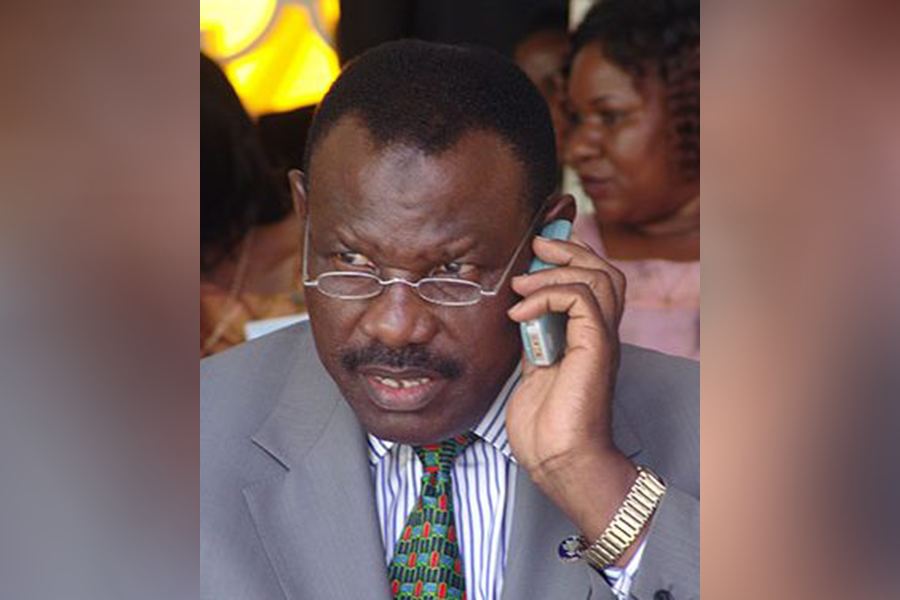
On this day in 1998, then newly elected Kampala Mayor Hajj Nasser Ntege Ssebaggala, popularly known as Seya, suffered an early setback in his legal battle in the United States after a federal judge declined his request to testify in Luganda during a key bail and detention hearing in Boston, Massachusetts.
Ssebaggala, who had recently become Kampala's first democratically elected executive mayor, was facing federal charges of bank fraud, transporting altered travellers' cheques and making false customs declarations.
His defence lawyers asked the court to allow him to testify in Luganda through an interpreter. Ugandan student Yunus Kalule had been brought in to provide translation during the proceedings.
However, US Magistrate Judge Marianne B. Bowler rejected the request, ruling that Ssebaggala should testify in English. The judge noted that English is Uganda's official language and the language of government and education.
She also cited Seya's recent participation in an international waste management conference in Chicago, where he had not required an interpreter, as evidence that he possessed sufficient proficiency in English.
The court consequently dismissed the interpreter and proceeded with the hearing in English. To ensure fairness, Judge Bowler directed prosecutors and witnesses to speak slowly so that Ssebaggala could fully understand the proceedings.
The ruling marked one of the first major setbacks in the Kampala mayor's US legal battle. Two days later, the court rejected his request to return to Uganda to perform his official duties, instead ordering that he remain under strict house arrest with electronic monitoring while awaiting trial.
The case concluded on December 4, 1998, when a federal jury in Boston found Ssebaggala guilty on eight counts, including bank fraud, transporting altered securities and making false customs declarations.
On February 24, 1999, US District Judge Richard G. Stearns sentenced him to 15 months in federal prison, imposed a fine of $10,000 and ordered restitution.
Under Uganda's laws governing public office at the time, the conviction for offences involving dishonesty resulted in Ssebaggala losing his position as Mayor of Kampala.
Despite the conviction and imprisonment, his political career did not end. After completing his sentence and returning to Uganda in February 2000, Ssebaggala remained one of the country's most popular politicians.
He rebuilt his political support and, in 2006, was elected Mayor of Kampala once again, underscoring his enduring appeal among many city residents despite the legal scandal.
